Feeding for Hoof Health

Factors that Affect Hoof Health

  • Genetics
  • Farrier work
  • Type of environment
  • Work intensity
  • Microbial invasions
  • Nutrition
Feeding for Hoof Health

Nutrition’s Role in Hoof Care

In this article, we want to focus on the role that nutrition plays in hoof health.

Consider the following scenario, where two horses are:
1. In the same environment and barn
2. Fed the same diet
3. Working at the same level
4. Competing in the same discipline
5. Trimmed by the same Farrier
6. Cared by the same person
However, one has healthy feet, and the other has poor-quality hooves.

Dietary Factors

In the case above, since all factors are the same, we may want to take a closer look at nutrition. Even though both horses are receiving the same diet, their genetic makeup plays a big role in how nutrients are absorbed and utilized.

When horses have poor feet due to dietary factors, it can be hard to determine the exact cause. However, you can assume that your horse is: 

  • Not receiving the correct nutrients
  • Absorbing nutrients insufficiently
  • Another dietary factor is interfering with nutrient utilization

It is of great importance to maintain correct ratios between all nutrients to prevent one nutrient from interfering with the absorption and utilization of another. When balancing diets it is just as important to prevent excesses as it is to correct deficiencies.

Hoof problems? Where should you start?

1. Provide hay and/or pasture as the basic diet
2. Provide a quality hoof supplement
3. Provide free-choice loose salt
4. Allow access to fresh, clean water

If your horse does have a noticeable hoof problem, and you begin a nutritional program to solve it, you should see a positive difference emerging from the coronary band within 8 to 10 weeks. If not, you should re-examine your nutrition and management program immediately with the help of an equine nutritionist.

Farrier's Formula, Farrier's Finish, Life Data Hoof Clay

Recommended Hoof Supplement: Farrier’s Formula® Double Strength

What should you avoid?

1) Avoid using several supplements
o Most supplements, when fed in conjunction with others, can lead to over-supplementation, nutrient interferences, and even create toxic levels of some ingested nutrients. Ask your veterinarian if it’s safe to feed one supplement with another.

2) Avoid high-bran diets
o Wheat, rice or other grains

3) In the vast majority of cases biotin alone is not enough to correct poor hoof quality.
o There are many other nutrients that affect hoof quality.

The key is fortifying hoof health without producing nutrient excesses or deficiencies. When choosing a hoof supplement, ask your farrier which one does he or she recommends. Chances are, it’ll be Farrier’s Formula®: the #1 recommended hoof supplement by Farriers in the United States.

Dr. Frank Gravlee

J. Frank Gravlee, DVM, MS, CNS
Founder of Life Data Labs, Inc.
H. Scott Gravlee, DVM, CNS
Equine Nutrition Consultant

Case Report: Laminitis

Summary

A 13-year-old Quarter Horse gelding was treated for severe laminitis with Animalintex poultices, Farrier’s Formula®, Pegasus Laser Therapy, and Soft-Ride Boots, which allowed for the growth of new hoof walls after the old hoof walls had rotated away and sloughed off. These therapies to increase circulation and provide nutrition to the hooves were successful in returning the gelding soundly to his previous level of work after 18 months.

Punctured
Right Hind Sole 07/02/2012

Introduction

Laminitis in its most simple definition is inflammation of the sensitive laminae of the hoof wall. The cause however can vary from trauma, to grain overload, to toxins, and beyond. This case study is meant to show that even the most severe of cases have a chance of survival and return to work if we attempt to help the body heal itself rather than use our traditional treatment regimes. However, the key to success relies on the presence of a willing and diligent owner, veterinarian, farrier, and above all a patient that is willing to be treated.

Left Fore Medial
Left Fore Medial 07/18/2012

Nutrition

In conjunction with antibiotic treatments, he received daily Probios. Free-choice grass hay was available at all times. Daily ration consisted of ½ cup Life Data® Forage Balancer. Hoof supplement consisted of 1/2cup Farrier’s Formula® Double Strength. Fresh water was also available at all times.

Hoof Resection
Right Hind Wall Resection 8/20/2012

Results

  • Hooves remained intact and grew at an increased rate.
  • The hoof wall that was present at the onset of the laminitic episode rotated away from P3 on each hoof. (see Left Fore Medial 7.18.2012).
  • The dead soles were removed at the beginning of the 3rd month of treatment. (see Right Hind Sole 7.2.2012).
  • The outer hoof walls detached at 4.5 months of treatment. (see Right Hind Wall Resection 8.20.2012).
  • New hoof wall grew in at the correct angle and did not associate with the old hoof wall. Hooves continued to grow and at 11 months all hooves had grown to touch the ground. (see Right Hind Lateral 3.30.2013). He remained tender on the front hooves but was able to have his back boots removed at that time.
  • At 18 months aluminum Natural Balance shoes were applied to his front hooves and he was able to trot off sound.

Right Hand Lateral
Right Hind Lateral 03/30/2013

Discussion

The combination of Animalintex poultices, Farrier’s Formula®, Pegasus Laser therapy, and Soft-Ride Boots led to a full recovery of a horse that should not have survived. Animalintex poultices allowed for debris and waste products to be removed from the body without the need to recirculate through the body. Farrier’s Formula® provided the nutrition needed for increased hoof growth. Pegasus laser therapy allowed for increased circulation to get the nutrients where they were needed most, as well as provide pain relief from standing in the “founder stance”. Soft-Ride Boots provided support and protection to the bandaged hooves as well as increasing circulation during the times he did choose to stand.

Recovered Hoof
Right Hind Lateral 05/29/2013

E. Jones Williams, DVM
Stable & Stock Veterinary Services, PLLC
Watertown, TN USA

Hoof Recovered from Laminitis

Feeding Farrier’s Formula® to Older Horses

Feeding Farrier's Formula to Older Horses

Feeding Farrier’s Formula® to an older horse, even though he does not have hoof problems, has many benefits. One of the problems in feeding the aging horse is that mastication (chewing) of feed becomes less efficient, and after the feed reaches the digestive tract, nutrient absorption is diminished. Also, the connective tissue, including skin, hoof, bone, tendons, and muscle, is not as strong and healthy as in younger horses. Another geriatric problem is that metabolism, and therefore activity, is often slowed due to decreased levels of thyroid hormone (thyroxin).

Addressing the Older Horse

Farrier’s Formula® addresses the above problems by improving feed efficiency and the quality of the feed given to horses. It also improves aging and weakened connective tissues by providing the nutrients necessary to build strong, healthy collagen. For many aging horses that are less active due to decreased amounts of thyroxin, Farrier’s Formula® has iodine and the essential amino acid tyrosine, which are the necessary building blocks for the thyroid gland to manufacture thyroxin.

Tracking Hoof Quality Through a Camera Lens

Tracking Hoof Quality Through a Camera Lens

Say Cheese! Believe it or not, one of the top recommendations we give to horse owners who have just begun feeding Farrier’s Formula® for hoof growth and quality is, “Get your phone out and take pictures of those hooves!”

Developing Hoof Growth Requires Patience

Feeding for hoof growth is a tedious process, and, as mentioned in previous blog articles, it takes time and patience. Even when promoting hoof growth through a hoof supplement, maintaining regular farrier schedules, and managing daily hoof care, seeing significant results can take several months. It can take nine months to a year for the hoof to completely grow out. Sometimes, it can take longer, depending on the original condition of the hoof or if unforeseen setbacks occur.

Unfortunately, setbacks to hoof growth may occur when the process is disrupted by:

  • Discontinuing the hoof supplement
  • Not following farrier recommendations
  • Inconsistent hoof management
  • Using caustic topicals for a “quick fix”
  • All the above

Subtle Improvements to the Hoof are Difficult to Notice

Becoming disgruntled is understandable. Improvements to the hoof will be subtle. Early on, the most significant change will occur from within the hoof, and the internal improvement won’t be visible. Most horse owners also see the hooves regularly, and subtle exterior changes can go unnoticed. The slow, gradual process blinds us to the improvements the hoof has developed. More than likely, your farrier will notice those changes before you do!

Phone Camera with Horses

Use the Camera as a Hoof Care Tool

A camera is a powerful tool for horse owners. Routinely taking pictures of the hooves and comparing them over time can help you witness subtle changes and even reveal the challenges that still need work. Many horse owners will be shocked at the difference between photos taken only three months apart, changes that would typically go unnoticed. Comparing photos over time and seeing improvements will help keep you focused on the task ahead!

Two-Month Hoof Progress

For example, we recently received a two-month update from a horse owner who had just begun supplementing with Farrier’s Formula® and using topical applications of Farrier’s Finish®.  This individual included new pictures with the update and said, “I think it is too early yet to know the impact that Farrier’s Formula is having…”

Hoof Quality Progress After two months
Left Front Hoof Two Months Apart After Supplementing with Farrier’s Formula®.

But, compared to the original photograph from two months ago, the changes are much more evident. Some of the noticeable improvements include:

  • A tighter white line
  • Healthier frog and sole
  • Less bruising

When the horse owner was shown the two photographs side by side, she was shocked and replied, “My goodness, you are right. What a difference in a relatively short time.”

The hooves still require much time and work, but the photos reveal that Farrier’s Formula® and Farrier’s Finish® are working together to rebuild a healthy hoof. This revelation and seeing the changes reinvigorated the horse owner.

Track Hoof Health Over Time

Photography is not only an excellent way to track your horse’s hoof growth but also a way to track overall hoof health. It gives you a record of when specific problems began taking place. These can be shared with your farrier or veterinarian to diagnose a problem. The more evidence available, the quicker a solution can be found.

Photographing Hooves

Here are a few tips to consider when photographing hooves.

Lighting For Hoof Quality
Lighting Plays an Important Role in Revealing Details in Hoof Quality.
  • Lighting is everything
    • Lighting is essential to reveal the details of the hoof. If the hoof is covered in shadows, details can be challenging to see. So, when picking a location for your photoshoot, try not to take them in your barn’s darkest corner.
  • Cleaned and trimmed
    • A dirty hoof doesn’t photograph well! Before you take pictures, clean the hoof and clear the sole of any debris.
    • Taking pictures after the farrier has visited is not only a good “timestamp” but ensures the hoof looks “its best” at that time.
  • Focus on the hoof
    • Your camera can easily focus on something other than the hoof. When taking your photos, double-check to ensure the hoof is in view, clear, and not blurry. Even the slightest blur can make those needed details challenging to see.
  • Use every angle
    • Capture pictures of the hoof from every angle. We encourage at least five angles: the front of the hoof, each side, the back, and the sole. The more angles, the better!
  • Repeat
    • Repeat the same angles each time you photograph the hoof. This makes it easier to compare photos over time.
  • Photograph regularly
    • We will leave this one up to you! Take pictures as often as you’d like, but we recommend at least scheduling your photo sessions with your farrier visits. It’s easier to remember and more convenient for you as the horse owner.
6 Month Hoof Quality Progress
Hoof Quality Improvements After Six Months Supplementing with Farrier’s Formula®

Hoof Care Notes

 When working towards building a new hoof, here are a few other notes to consider:

  • The first signs of success will appear in the hair coat.
    • The same nutrients essential for the hoof are also important for developing healthy skin and hair coat. The internal health of your horse is revealed externally. When you notice your horse developing a healthy and glossier hair coat while feeding Farrier’s Formula®, know that better hoof quality will follow.
  • The hoof doesn’t “heal.” It must “grow out.”
    • The cracks, defects, and poor hoof quality will not heal like a wound. They must grow out with the hoof. Farrier’s Formula® promotes the needed growth. Using a non-caustic hoof topical, like Farrier’s Finish® or Life Data® Hoof Clay®, protects the new growth from “hoof-eating” bacterial and fungal invasions that enter the hoof capsule from the hoof cracks and defects.
  • Nutrition is only one step in a greater equation.
    • Nutrition is essential for healthy hooves, but it is one factor of many. Genetics, mechanics, and the environment also affect the quality of your horse’s hooves. If you do everything correctly from a nutrition standpoint but don’t maintain balanced hooves and proper hoof management, hoof growth, and quality will still suffer.
  • Be familiar with your horses’ hooves.
    • Your farrier shouldn’t be the only one picking up your horses’ hooves. As a horse owner, you should know your horse’s hooves like the back of your hand. Cleaning and managing hoof care is a daily routine.
      • If you stall your horse at a public barn and cannot see your horse daily, build a community within the barn to share the responsibilities of daily hoof management.
  • Talk with your farrier.
    • Even if you don’t notice improvements to the hoof, there is a good chance your farrier will. They may notice the better hoof quality when trimming the hoof. For example, they may feel more resistance when rasping the hoof wall or less tenderness in the sole.
Farrier Trimming Hoof

Last Thoughts

Hoof care can be tedious and frustrating, but with the right tools, a good farrier, and patience, you can develop a hoof your horse can be proud of. Using photography as part of the process is fun and an excellent tool for management and care. If you have any questions regarding hoof care or any of the products mentioned in this article, please call us at 1-800-624-1873 or e-mail us at cservice@lifedatalabs.com. If your horse develops a hoof-related issue, consult with your veterinarian and farrier as soon as possible.

Joint Supplements for Horses: A Review of MSM, Glucosamine and Other “Typical” Ingredients

Horse eating Joint Supplement from Owner's Hand

Due to the risk of over-supplementation, horse owners must be cautious of the ingredients used when supplementing for hoof and joint health. Joint supplements containing glucosamine, hyaluronic acid, chondroitin sulfate, and MSM are often given in addition to hoof supplements. These ingredients are typically “thought of” when discussing nutrition for joint health, but do they make a difference? How do they affect your horse when given with other supplements?

Supplementing Horses with sulfur from MSM vs. sulfur-containing amino acids

Synthetic MSM contains about 34% sulfur and is manufactured via a chemical reaction involving DMSO (dimethyl sulfoxide) and hydrogen peroxide. A refinement process is necessary to remove any impurities and toxic by-products from the MSM following the chemical reaction.

Excess sulfur in the diet has been shown to block the proper absorption of copper in many species. Copper and Vitamin C are necessary to form collagen to build the healthy connective tissue essential for strong hooves and joints. Reduced copper absorption from excessive sulfur supplementation will produce the opposite of the intended, resulting in diminished hoof and joint health.

Methionine and cystine are the two sulfur-containing amino acids. Quality hoof supplements contain these amino acids. Rather than MSM, methionine and cysteine are the sources of the sulfur needed to build healthy connective tissue for strong hooves.

Excessive sulfur supplementation often occurs when feeding a hoof supplement and a joint supplement concurrently. As a rule, when feeding a hoof supplement containing methionine, do not add a joint supplement containing MSM.

Farrier’s Formula® DS Plus Joint is a balanced Hoof and Joint supplement formulated with methionine and cysteine to provide the sulfur needed for Hoof and Joint support. Feeding Farrier’s Formula® DS Plus Joint eliminates the risk of sulfur over-supplementation.

Glucosamine in Joint Supplements for Horses

Glucosamine
Glucosamine is often included in Equine Joint Supplements.

Equine joint supplements usually contain glucosamine. Glucosamine is a specialized form of sugar the body utilizes for cartilage development. Although glucosamine is not directly converted to glucose, supplementation at higher levels has been implicated in increasing insulin secretion because the body thinks there is excess glucose in the bloodstream. As a precautionary measure, avoiding glucosamine administration may be recommended for horses with metabolic issues or recurring bouts of laminitis. 

Due to this risk, a few Joint supplement manufacturers have elected to remove Glucosamine as an ingredient. Farrier’s Formula® DS Plus Joint is frequently used for horses recovering from laminitis and laminitis-prone horses. Farrier’s Formula® DS Plus Joint does not contain Glucosamine.

Hyaluronic Acid for Equine Joints

Hyaluronic acid has proven beneficial when injected. However, little evidence exists when given orally that the compound is absorbed intact through the equine intestines or makes its way to the joints. Supplementing hyaluronic acid may or may not have benefits to the joint. Farrier’s Formula® DS Plus Joint does not contain hyaluronic acid.

Chondroitin Sulfate in Equine Joint Supplements

Chondroitin sulfate is derived from animals or marine life. Animal-derived ingredients or animal-origin ingredients increase the risk of contamination with harmful bacteria or other unsafe compounds when added to feed products. There is also little evidence that supplementing chondroitin sulfate to horses benefits the joints. Farrier’s Formula® DS Plus Joint does not contain Chondroitin.

Farrier’s Formula® DS Plus Joint

Farrier's Formula DS Plus Joint
Farrier’s Formula® DS Plus Joint Rebuilds Hoof and Joint Health

To address these issues, Life Data® developed Farrier’s Formula® DS Plus Joint. Farrier’s Formula® DS Plus Joint does not contain MSM, chondroitin sulfate, hyaluronic acid, or glucosamine. Farrier’s Formula® DS Plus Joint also contains the correct level of sulfur provided organically by methionine and cystine.

Farrier’s Formula® DS Plus Joint is effective by strengthening the connective tissue of the ligaments surrounding the joints and rebuilding cartilage. Ornithine, an active ingredient in the product, works with arginine in the urea cycle to reduce ammonia levels. Ammonia is converted to urea. Urea has notable detrimental effects on the joints and cartilage, even at low levels. Long-term excessive urea levels in humans lead to gout.

Proline is another active ingredient. It is an amino acid that gives ligaments “stretch,” providing additional motion for the joints and making ligaments and joints less susceptible to injury and the resulting inflammation. People commonly take Proline to decrease joint pain.

Manganese is another ingredient in Farrier’s Formula® DS Plus Joint and is an essential component of cartilage. The product has many more ingredients to build and support the joints, hooves, and skin connective tissue.

Farrier’s Formula® DS Plus Joint works with a unique and different approach to joint care. It also provides all the benefits to hoof health that our original Farrier’s Formula® Double Strength provides to the horse. When providing Farrier’s Formula® DS Plus Joint, horse owners can take comfort in knowing they are promoting the health of their horse’s hooves and joints with a balanced product backed by years of research.

Equine Cushing’s Disease and PPID

Cushing’s Disease

Horse with Cushing's Disease

The number of horse’s affected by Cushing’s Disease (PPID) is steadily increasing in the United States as the horse population is living longer. Unfortunately, there are still many unanswered questions revolving around Cushing’s Disease and how it impacts the horse. Cushing’s Disease falls into the same category of diseases as Metabolic Syndrome and Insulin Resistance in that the extent of the problem is relatively “new” to the equine industry. Continued research into the disease and other metabolic problems must be conducted before we can fully understand the full extent of these diseases. What we do know about equine Cushing’s Disease can be used to help identify the disease early and assist in improving the overall quality of life for affected horses.

What is PPID in Horses?

PPID, or Pituitary Pars Intermedia Dysfunction, is another name used to identify Cushing’s Disease. Breaking down the name, PPID, helps us better define what is occurring in the Cushing’s horse. For example, “Pituitary” refers to the gland that is being affected in the horse. The pituitary gland in the horse is only as large as a prune and is located at the base of the brain and produces hormones in response to brain signals. The word “dysfunction” relates to the dysfunction occurring in the small middle region of the pituitary gland (Pars Intermedia). This dysfunction effects the inhibitory function of the gland, resulting in the excessive production of the hormone ACTH. The excess ACTH stimulates the adrenal gland to overproduce cortisol. High levels of circulating cortisol lead to a multitude of problems.

Signs of Cushing’s Disease in Horses

The average horse with Cushing’s Disease is around the age of 15, when signs of the disease appear. It is estimated that the disease will impact approximately 30% of the population of horses who are 15 years of age or older. It is beneficial for horse owners to watch for any signs of Cushing’s Disease, especially if they have an older horse, so that it may be diagnosed in the early stages. Early identification can make the disease easier to manage and increase the quality of life of the Cushing’s horse. Below is a list of early signs:

  • Increased lethargy
  • Regional shaggy hair coat
  • Delayed shedding
  • Loss of topline
  • Regional fat pockets
  • Abnormal sweating
  • Recurrent laminitis
  • Recurrent hoof abscesses

Cushing’s Disease can progress slowly, but the advanced stages can also develop unknowingly. These advanced stages are much more severe and have a greater impact on the horse’s health. Symptoms of the advanced stages of Cushing’s include:

  • Dull hair coat
  • Poor shedding
  • Exercise intolerance
  • Round abdomen (potbellied appearance)
  • Muscle atrophy
  • Regional adiposity
  • Poor performance
  • Loss of topline
  • Increased thirst/urination
  • Blindness
  • Delayed healing
  • Laminitis
  • Hoof abscesses
  • Suspensory ligament/tendon laxity 

Feeding a Horse with Cushing’s Disease

A horse’s diet plays a major role in every aspect of the horse’s overall health. As such, feeding a proper, balanced, and basic diet to a horse with Cushing’s Disease is one of the most beneficial lifestyle changes to make. Many horses with Cushing’s will struggle maintaining a normal weight, either developing an overweight or underweight body condition score. In either case, horse owners must be mindful of the calorie, carbohydrate, and sugar intake their horses consume daily. The addition of a quality hoof supplement is also recommended to help in the recovery of many of the hoof related issues that often develop from Cushing’s Disease. Below is our recommended feeding routine for horses with Cushing’s.

  • Grass/Hay
    • Be mindful of the sugar in the grass
      • You may consider limiting grazing
    • Allow grazing only in the morning to early afternoon hours
    • If the horse is overweight, consider a dry lot.
  • Additional Calories (Only for Underweight Cushing’s Horse)
    • Avoid carbohydrates
    • Remove all “Complete Feeds”
    • Shredded sugar beet pulp or copra (coconut pulp)
      • High in Fiber
      • Low in Carbs
      • Good option for underweight Cushing’s Horse
      • Soaking prior to feeding helps prevent choking and excess sugar

*Overweight horses will not require additional calories*

  • Farrier’s Formula®
    • Promote Hoof Quality
    • Assist in laminitis recovery
    • Assist in hoof abscess recovery and prevention
    • Improves hair coat and skin quality
  • Life Data® Adrenal Formula
    • New formulation from Life Data
    • Designed specifically for the support of Horses with Cushing’s

Life Data® Adrenal Formula

By conducting blood analysis research, Life Data® has discovered many correlations in horses diagnosed with Cushing’s Disease. Life Data® Adrenal Formula was formulated using this research and will provide additional support for horses with Cushing’s. The active ingredients may help improve the function of the adrenal gland, improve metabolism, regulate thyroid hormones, and reduce the effects of Cushing’s. It also provides essential antioxidants and helps rebuild healthy connective tissue. Life Data® Adrenal Formula is designed to help promote:

  • Normal adrenal gland function
  • Improved glucose metabolism
  • Rebuilding of healthy connective tissue
  • Regulation of thyroid and adrenal hormones
Adrenal Formula for Equine Cushing's Disease

Treating Cushing’s Disease in Horses

Unfortunately, no cure for Cushing’s Disease has been found. If you believe your horse may have Cushing’s Disease, it is important to consult with your veterinarian as soon as possible. Your veterinarian can conduct yearly tests to evaluate your horse’s condition and provide medication to assist in regulating symptoms. Providing proper nutritional support along with Farrier’s Formula® and Life Data® Adrenal Formula can also assist in relieving the effects of Cushing’s Disease. If you have any questions regarding proper equine nutrition or any of the products mentioned, please contact us.

Old Nail Holes: An Open Door to Hoof Problems

Nail holes in hoof

The farrier comes, does their job, and everything is good. Hooves are trimmed, new shoes are set, and we don’t need to consider hoof care again for another 6 weeks. Right?

Unfortunately, a common mindset is “Hoof care is the responsibility of the farrier, and the farrier alone.” Many horse owners don’t consider the impact that nutrition, regular maintenance and the environment has on the hoof. Proper hoof care must be a daily objective by the horse owner. Best practices to help horse owners achieve and preserve quality hooves include:

  1. Feeding for hoof health
  2. Examining for signs of unhealthy hooves
  3. Regularly cleaning the hooves
  4. Treating/preventing bacterial invasions
  5. Keeping hooves conditioned in wet/dry periods

Even the smallest overlooked detail can be the difference between healthy and unhealthy hooves. For example, the small nail holes left behind after changing a shoe may not seem like a big deal, but they are an open door for bacterial infections and unwanted debris. In fact, old nail holes left unprotected can lead to the development of:

Old Nail Holes and The Farrier

Farriers are aware of the hoof problems that old nail holes, hoof cracks and other hoof defects can create. You may see your farrier pack old nail holes with a hoof clay or apply a hoof topical. This is a great practice to provide protection from invading microbes while the old nail holes and defects grow out. Unfortunately, these measures will not last and the process will need to be repeated regularly. Otherwise, the nail holes will be susceptible to microbial invasions once the initial applications have worn off. Waiting until the next farrier appointment is too long between applications. This is especially true to horses who are commonly exposed to:

  • Wet and muddy environments
  • Unclean paddocks or stalls
  • Sandy or rocky terrain

Protecting Old Nail Holes

Talking to your farrier is a great starting point in maintaining hoof quality and protecting your horse from hoof problems. Your farrier can advise you on how to properly clean the hoof and recommend products to help address any issues. Below are a few helpful tips to also consider:

Life Data Hoof Clay Under Shoes
  1. Properly Clean the Hoof Daily

    • Old nail holes easily become packed with mud, grime, feces, and other unwanted debris. Picking and cleaning the hoof not only clears the unwanted debris but opens those areas of the hoof to oxygen. A hoof packed with debris is unable to “breathe.” The hoof eating microbial invasions that cause conditions like crumbling horn and White Line Disease thrive in low oxygen environments. Old nail holes provide an ideal environment for this to occur.
  2. Regularly Pack Old Nail Holes with Life Data® Hoof Clay®

    • Life Data® Hoof Clay® is a non-caustic anti-microbial clay that can be used to pack into old nail holes. This natural porous clay allows the continued flow of oxygen into the hoof wall while help preventing other debris from penetrating into the nail holes. The anti-microbial properties of Life Data® Hoof Clay® defend against the microbes that lead to  Thrush in Horses and White Line Disease.  Life Data® Hoof Clay is also non-caustic, so it is safe to apply with your own hands and will not burn or damage healthy hoof tissue.
      • For extra protection utilize Farrier’s Finish® following application of Life Data® Hoof Clay®.
      • Before the shoe is nailed on, ask your farrier to apply Life Data® Hoof Clay® over the white line area.
  3. Feed for Hoof Health

    • Your horse’s diet plays an important role in hoof quality and development. Utilizing a feeding program that is focused on hoof health will help develop a hoof that is more resilient to microbial invasions and other hoof related problems. Adding Farrier’s Formula® Double Strength, a hoof and coat supplement, will also promote quality hoof growth and expedite the time for old nail holes to grow out.
  4. Maintain Clean Environments

Thrush in Horses

A “Thrushy Hoof” Isn’t a Healthy Hoof

Horse Hoof with mild thrush
Farrier Trims Hoof with Mild Case of Thrush

“My horse’s hooves are healthy. They just have a little bit of Thrush,” is a statement we hear too often from individuals battling thrush. Unfortunately, Thrush in horses has become such a common occurrence that many horse owners do not give it the levity it deserves. It is important that the horse owner understands, a hoof with any amount of Thrush is NOT a healthy hoof!

In short, Thrush in horses is a microbial invasion of the sulci, or the grooves surrounding the frog, that often leads to an infection in the tissue of the frog. In previous blogs we have discussed what causes Thrush. Your horse’s hooves can be predisposed to Thrush by:

  • High humidity and wet environments
  • Stalls containing urine, excrement and excess moisture
  • Lack of oxygen to the frog area due to packed debris
  • Poor hoof maintenance
  • Improper trimming

Exposing your horse to one or more of these factors can create conditions conducive for Thrush development. Once Thrush has established, address it immediately. Even mild Thrush can become serious quickly.

Thrush, The Hoof and The Horse Owner

The first steps in preventing or treating Thrush in horses is to provide the necessary elements to promote the best quality hoof possible.

The health of your horse’s hooves is not your farrier’s responsibility alone. Treating and preventing Thrush will take joint effort from both you and your farrier. Thrush, and other hoof problems, will likely continue to develop and never resolve if you are not involved in the daily responsibility of caring for your horse’s hooves. Fulfilling this responsibility will help prevent future cases of Thrush. This responsibility can be broken down into three components.

  1. Maintenance
  2. Nutrition
  3. Environment

Hoof Maintenance

There is more to hoof maintenance than scheduling your farrier every six weeks. Proper hoof maintenance is a daily objective that the horse owner must manage.

  • Pick and Clean Hooves
    • A hoof packed with debris creates the perfect anaerobic, or low oxygen, environment for Thrush to develop and spread. As the horse owner, it is your responsibility to ensure your horse’s hooves are being picked clean daily.
    • If you remove the debris daily, Thrush will not likely have a suitable environment to develop.
  • Maintain a Regular Farrier Schedule
    • As mentioned in a previous blog, it is important to maintain a regular farrier schedule. Your farrier can help catch early signs of hoof related issues and assist in treating Thrush. Hooves that are grown out or not trimmed properly can trap unwanted debris, making it more difficult to keep the hoof clean and create an optimal environment for the growth of the anaerobic microbes associated with Thrush.
  • Remove Harmful Hoof Topicals
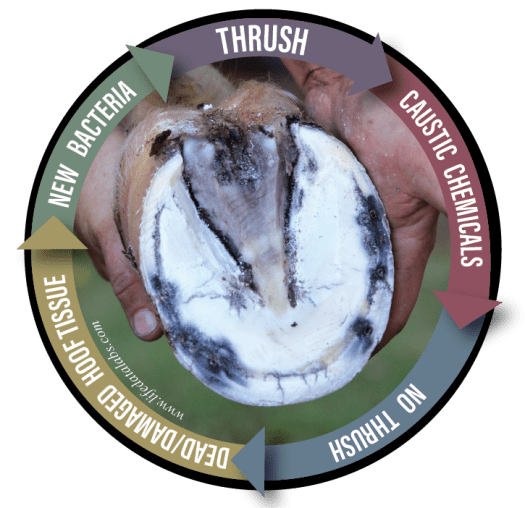
    • Many “Thrush Killing” hoof topicals on the market are caustic and damage or seal off healthy hoof tissue. This may kill the exposed Thrush microbes on the surface; however, the resulting denatured proteins not only seal the underlying tissue from oxygen, but also create a nutrient medium for any remaining microbes and future microbes to thrive. This often leads to patterns of recurring Thrush. It is important to stay away from caustic hoof remedies for Thrush
Cycle of Thrush in Horses
The Cycle of Equine Thrush

Equine Nutrition

You may be asking, “What role does Nutrition play when fighting Thrush in Horses?” Nutrition plays a vital role in the development of a healthy hoof. A healthy hoof is more resilient to the bacteria that causes Thrush. As the horse owner, it is your responsibility to ensure your horse receives a balanced diet that supports hoof health. You can learn more about proper equine nutrition here.

  • Hoof Supplementation
    • Quality hoof supplements can assist in developing new and healthier hoof growth. The nutrients provided will also strengthen the hoof, making it more resilient to chips and cracks, acting as entry points for the microbial invasions that lead to crumbly hoof horn, White Line Disease and Thrush. This new growth will also quicken the recovery time of the hoof.

Environment

Even with proper maintenance and nutrition, the environment can wreak havoc on your horse’s hooves. Most cases of Thrush are predisposed by environmental conditions. Leaving your horse in wet and mucky areas or in unclean paddocks can quickly destroy the hoof. You will promote chronic Thrush if your horse is regularly being exposed to these environments. It is important to consistently manage the environment surrounding your horse.

Poor environmental conditions for hooves
Poor Environmental Conditions for Hooves
  • Environmental Management
    • Keep stalls clean of excrement and as dry as possible.
    • Limit exposure, if possible, to wet and muddy paddocks and pastures.
    • Regularly apply a non-caustic hoof conditioner to control moisture balance, bind ammonia from excrement and kill bacteria.

When left unchecked, Thrush can become a serious issue and even lead to lameness. It is important to act at the first signs of Thrush and not wait until it becomes more serious. Through proper hoof management, horse owners can not only treat current cases of Thrush but can also prevent future cases from developing. Always consult your farrier and veterinarian if your horse develops any hoof related issue. If you have any questions on treating Thrush or on any Life Data® product, please contact us at cservice@lifedatalabs.com or call us at 1-256-370-7555.

Hoof Supplements: Finding a Recipe for Improved Hoof Health

Recipe for Improved Hoof Health

How many times have you planned a meal and then realized you forgot an important ingredient? How many times have you had a slip of the hand, and turned your slightly salted mashed potatoes into a taste-bud-twisting salt mine? If you enjoy baking or cooking, you probably understand the importance of a recipe and the ingredients involved. You know that too much flour in a cake recipe can result in a cake that is dry and crumbly. Not enough flour and your cake will become a watery mess that no one wants to eat. The ingredients are essential and it’s important to utilize them in the correct balance and ratio to cook a masterful dish. The same analogy can be used when considering your horse’s hoof supplement. Without the correct ingredients in the proper ratios, a hoof supplement’s formula can be a recipe for disaster.

There are three important questions to consider when choosing a hoof supplement:

  • What ingredients are in the hoof supplement?
  • Are the ingredients balanced and in the correct ratio?
  • Does the supplement work?

The Ingredients Hoof Supplements are Key to Improved Hoof Health

What would you do if someone handed you all the ingredients for a salad, and asked you to make a cake with it? Just like in baking or cooking, the ingredients in your hoof supplement matter. Before choosing a supplement ask yourself, “Does this supplement contain the needed nutritional ingredients that my horse’s hooves require?”

The equine diet is one of the major contributing factors to the health of your horse’s hooves. Many of the hoof related issues we see today are being caused by nutritional deficiencies or excesses in the horse’s diet. Despite many misconceptions, the horse requires more than just Biotin to improve hoof quality. It takes a collection of nutrients that are lacking in the modern-day horse’s diet. On the reverse side, we cannot overload the horse with nutrients without risking over supplementation. It’s important to understand which nutrients are important for hoof health; how these nutrients interact with one another; and what role they play in the health of the horse.

The Formula in Hoof Supplements Matter

pelleted hoof supplement
Pelleted Hoof Supplements are Typically More Palatable

You cannot take all the cake ingredients, throw them into a bowl unmeasured, bake it and expect it to come out perfect. The recipe is there for a reason and too much or too little of the ingredient can quickly turn your cake into an inedible mess. The same is true for a hoof supplement. Even with all the right ingredients and nutrients, a hoof supplement will not benefit your horse if the nutrients are not balanced and in the right ratios. For example, a supplement containing an excess of selenium could cause drastic hoof issues. Certain ingredients can also interfere or block other important nutrients when improperly balanced. For example, excess phosphorus can interfere with the horse’s ability to absorb calcium, creating a calcium deficiency in the horse. It’s important to ask, “Is this supplement balanced? Are the nutrients in the correct proportions? How will it fit in my horse’s current feeding program?”

Does the Hoof Supplement Work?

If the supplement you are providing does not have the correct nutrients or formula, it will not be effective. The ingredients and formula are key to a quality hoof supplement. So, how do you know which supplement to use?

  • Find an Established Hoof Supplement
    • If a hoof supplement doesn’t work, it won’t stand the test of time. Find a hoof supplement that has a good reputation and has been around for several years.
  • Research Testimonials
    • In today’s technological society, finding product reviews is easy. Look at the manufacturer’s website and social media accounts; read reviews and verify that the supplement has been successful for others.
  • Ask your Farrier
    • No one knows hooves like your farrier. Ask which hoof supplement works best.

Our Recommended Hoof Supplement:

Farrier’s Formula® Double Strength

Farrier's Formula® Double Strength: Hoof Supplement for Horses
#1 Farrier Recommended Hoof Supplement

Introduced over 40 years ago, Farrier’s Formula® ushered in the concept of “feeding the hoof” and was the first hoof supplement on the market.  Developed by Dr. Frank Gravlee, Farrier’s Formula® is based on extensive laboratory research that analyzed the relationship between nutrient imbalances in the blood and hoof problems in horses. Dr. Frank Gravlee identified not only what nutrients were important for hoof health, but in what proportions and ratios. Research continues to this day to develop additional products for the hooves, such as a formulation for acute laminitis. Every bag of Farrier’s Formula® provides the nutrients needed for the growth of healthy and strong hooves. The effectiveness of the product has been proven in scientific studies at independent universities. Farrier’s Formula® is the #1 recommended hoof supplement by farriers.

Hoof Health Takes Patience

Hoof Health and CareThere is one important fact to remember when it comes to growing a healthy hoof, it takes patience. Hoof health is a long-term commitment and takes time to develop. It can take up to a year for the average horse to completely regrow a hoof. Depending on the age of the horse and the severity of the hoof’s condition, it could take even longer. There are other factors that can affect the health of the hoof and, although there are a few factors we cannot change such as genetics, there are factors we can address. If we are willing to put in the time and effort, we can develop the best hoof genetics will allow.

Hoof Health and Nutrition

Nutrition is one of the biggest factors that will affect the health of your horse’s hooves, but this will take time and patience. Changing your horse’s diet will not fix the issue in just a few days. Adding a hoof supplement, such as Farrier’s Formula® Double Strength, to your horse’s diet is one of the easiest ways to provide your horse with the nutrition it needs to grow a healthy hoof. By providing the proper nutrients, you are building the hoof from the inside out. This process can make a world of difference for your horse’s hooves by improving the hoof internally and promoting hoof wall thickness and strength. But this isn’t a short-term fix. We are not preparing for a race, we are preparing for a marathon. Adding Farrier’s Formula® to your horse’s diet is a long-term investment. For many horses it will be a life-long investment.

As we said above, you are providing for the hoof from the inside out, which means you may not visually see results right away. This is where your patience comes into place. If you are not regularly feeding Farrier’s Formula® or are stopping and switching supplements every few weeks you will not receive the same results. Be patient, give the nutrients time to build up in the horse’s system and work from within the horse. When regularly feeding Farrier’s Formula®, it could take up to eight weeks before you begin seeing new hoof growth around the coronary band. In fact, many of our customers have even reported seeing a healthier hair coat before ever seeing new hoof growth. Once Farrier’s Formula® has had time to build up and provide the important nutrients your horse needs, it will then promote better quality and faster growing hooves.

The Environment and Hoof Health

Nutrition is only one aspect of hoof growth and quality, and we cannot discuss nutrition without also addressing the environment. Where nutrition plays a key role on the inside health of the hoof, the environment plays a role on the outside. If you’re not protecting the hoof from the outside environment, you are not protecting the investment you’ve made internally. Even with proper nutrition and supplementation, the environment can wreak havoc on your horse’s hooves and destroy any new growth your horse has made. Regular farrier work, clean stalls and proper nutrition can help prevent many of these environmental issues from developing, but they do not always stop it.

Regularly applying Farrier’s Finish® Hoof Disinfectant and Conditioner to the outside of the hooves will protect the investment you have made with Farrier’s Formula®. Farrier’s Finish® will protect new growth from the environment by helping control microbial invasions, regulating moisture in the hoof capsule, and addressing other environmental problems. For example, Farrier’s Finish® contains yucca extract, which is beneficial to horses that remain stalled or have been exposed to neglected stalls. The yucca in Farrier’s Finish® “binds” with ammonia in the stall to reduce irritation to the hoof capsule. Farrier’s Finish® not only protects and disinfects the surface of the hoof, but it also penetrates deep within the hoof wall to combat microbes at the foundation of the invasion. By applying Farrier’s Finish® you are giving the hoof the chance to grow and flourish.

Full Hoof Protection

Hoof Topical and Disinfectant Farrier’s Formula® and Farrier’s Finish® are the perfect team to establish better quality hooves. By providing proper nutrition and controlling the environment you are promoting the best quality hoof genetics will allow. But you must be patient and consistent to witness the results. If you truly want to see the best hoof underneath your horse, you must be willing to put in the time, resources, effort, and patience that is required. If you have any questions, feel free to contact us at cservice@lifedatalabs.com or call us at 1-800-624-1873. We also recommend talking with your farrier and veterinarian about any hoof related issues your horse may be having.